So here we are, at the end of Week 1 of #NaNoWriMo – National Novel Writing Month.
I’m feeling pretty good about having made it this far with only skipping one day. I have a full-time job, so I knew going in that I would have to do some power-writing sessions on the weekends to keep my average up. And that’s exactly what I’ve done.
I have an account on NaNoWriMo.org where I post my stats, but I’ll share them here as well:
- Nov. 1: 1525
- Nov. 2: 0
- Nov. 3: 3310
- Nov. 4: 693
- Nov. 5: 749
- Nov. 6: 3429
- Nov. 7: 1651
I consider the first week a win. I’m sticking pretty close to my necessary average of 1,667 words a day to meet the NaNoWriMo goal of 50,000 words in 30 days. How do I plan to do it? Coffee and Google Assistant.
I’ve set an alarm to wake up at 5:30 every morning, even Saturday and Sunday. When I dismiss the alarm, it launches a little routine where a cheery British voice says “Good morning, Edie. Have a great day!” Thanks to the magic of smart lights, this also turns on the lights in my writing area. Unfortunately, she doesn’t make the coffee.
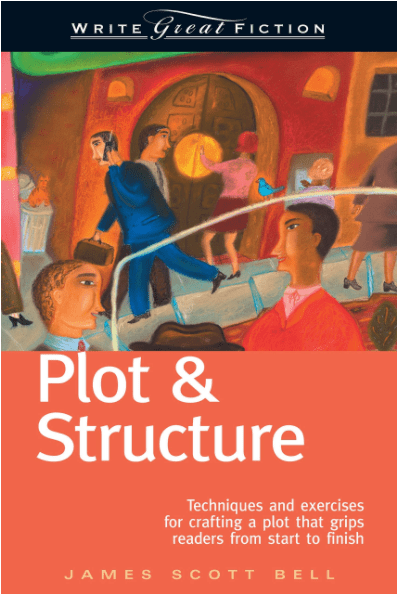
Seriously, I also would feel much more daunted about tackling this task if I had not spent the past several months working on outlining. Here, I have to credit the wonderful book “Plot and Structure” by James Scott Bell. I bought the softcover edition instead of Kindle so that I could highlight, underline and use page flags.
The entire book is well worth checking out for any novel writer. In particular the chapter on outlining is pulling me through NaNo this month, but the entire book really helped me fill in plot holes and deepen my characters.
Through my journey of becoming a novel writer, I’ve discovered that I am an outliner. I need to know where the characters are going. This has not always been true of my short-form writing, including my former career in journalism. Bell shares tips on several methods of outlining, but it was the “Borg” method that spoke to me, and not [only] because I’m a Star Trek fan and a science fiction writer.
The Borg outlining method as Bell describes in one of the last chapters of his book has you start with the big picture, and gradually fill in more detail to your outline. It helps you ensure that you have all the key plot elements in place before you start writing and pulls together what Bell has been teaching throughout “Plot and Structure.” It’s “only” 10 steps, but I think you’ll quickly see how it can take months. The Borg method advises this progression, in which each step builds upon the work you’ve done in the previous steps:
- Define LOCK elements (Lead, Objective, Confrontation, Knockout ending).
- Write the “back cover” copy for your book.
- Create the overall, three-act structure. For Act 1, what’s the first doorway (action or event) that will take your Lead into the next part of the story? For Act 2, what the second doorway that will take your Lead to the final part of the story? For Act 3, what is your ending scene?
- Character work. This is where you begin to really delve into your cast of characters including their names, descriptions, roles, objectives and motives, secrets, etc.
- Create act summaries. [This is where you start getting down to the nitty gritty.] Just a paragraph that explains what happens in your story in each of the three acts.
- Create chapter summary lines. [Now it’s starting to feel like a novel.] For each of your acts, there will be separate chapters. At this step, you only need to write a single sentence that explains each chapter.
- Do full chapter summaries. [Now we’re cooking!] Bell advises that you keep the summary for each chapter around 250 words. This is not the step to write a chapter – just summarize.
- Rest, whether it’s for a day or a week. Your brain needs the break. [Yes, really. You’ll need to rest up for what comes next.]
- Write. Just get it all down. Don’t edit as you go, because this is just a first draft.
- Revise. [There’s a whole chapter on this in Bell’s book.]
I’m currently in step nine with NaNoWriMo after spending too much time on step eight. While I let my characters and scenes flow as I’m writing each morning, the summaries remind me the information, actions or events that each chapter needs to include for the story to work. And if characters want to take me down another path, then I go back to the character work or the LOCK elements at the very beginning to figure out if that would make sense for the story and the character.
So my characters and I are “plotting” along nicely, thank you. On to the second week, with my “Borg” method to guide us.
 Georgia Writer